

UKSSN @ Cop26

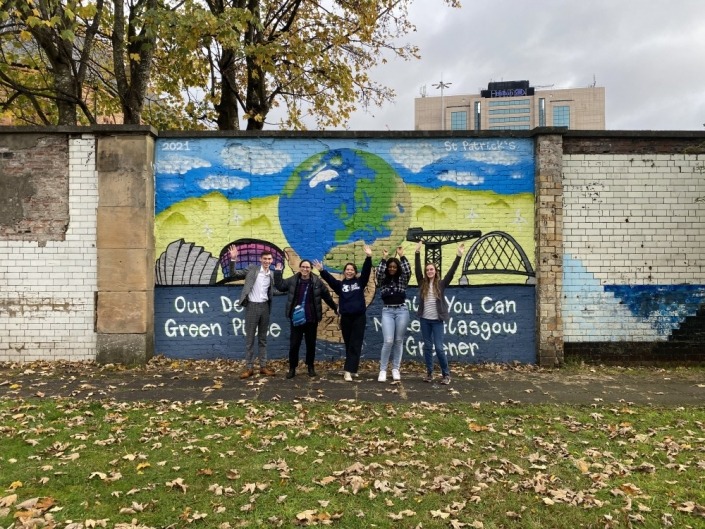
Global Social Leaders had the pleasure of meeting with Jack, Grace and Abi from the UK Schools Sustainability Network (UKSSN) at COP26 in Glasgow. We discussed their role in the UKSSN, what brought them to the conference, their hope for the future, for COP26… and much more!

It was amazing to see these young environmental activists together. To see the optimism in their eyes and hear the passion in their voices. After our conversation I was left feeling reassured that with these young people paving the way, change is going to happen… Change is going to come.

Dive into our discussion below!
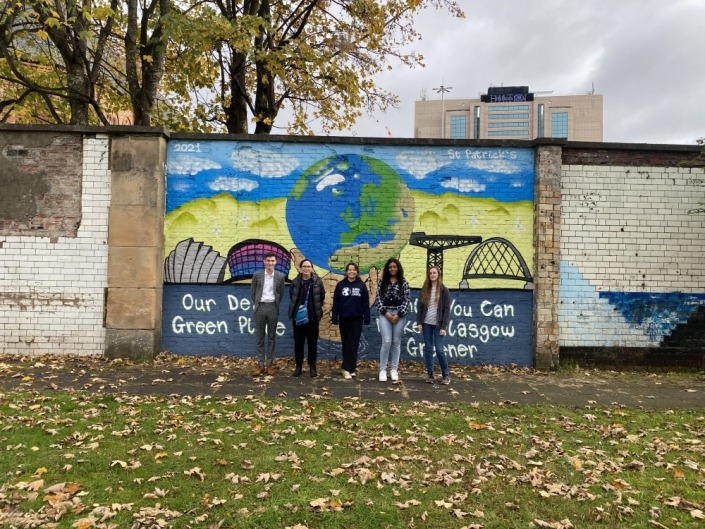
This conversation took place on Friday 5th November 2021 at St. Peter’s Primary School in Glasgow. The students adult supervisor, Mary Leonard, was present. All questions were asked by Alice Curran from Future Foundations.

YOUTH ENVIRONMENTAL ACTION

So we are here today to talk about your journeys with UK Schools Sustainability Network, and also to talk about all things COP26. I’m going to start off with a broad and perhaps obvious question, which is why are you here in Glasgow?

J: I’m here because I think it’s really important that young people get a say in climate issues and so far we’ve not really seen that at COP26. It’s important that we, as a group, really push for that.

G: I’m here because I’d like to see the changes that MPs and delegates will make, and it would be really nice if they would stick to the actions and do what they say they are going to do.

A: I’m here because I really want to take this information back to other schools because it’s so difficult to get a good understanding of what’s happening.

Definitely – I guess your work with the UKSSN is all about that as well, reaching schools across the UK. I wonder if you could tell me a little bit more about your work with and role in the network?

J: I run our Somerset branch. But it’s all about making sure that students from across the country get to meet each other, share ideas, and get to learn about climate issues together and work on them together.

G: I am part of the London branch and joined a couple of months ago. I am relatively new to UKSSN but like Jack said, my school really pushed for me to join because it was an opportunity to be with and work with likeminded people.

A: I’m here with the Yorkshire branch, and we’ve only just come off the ground so this is really its start now.

How did you all come to be here at COP26? Did you put yourselves forward to attend?

J: Yeah so we got offered this trip through the network and we had to fill out an application form. There were about 200 applications made, and only 20 spaces.

Wow! Really well done for being selected. Now Jack, I want to turn to you for a second to talk about your history with Global Social Leaders and Future Foundations. I wonder if you could give some insight into your journey with GSL, and how it has led you to today?

J: Sure! A group of us at my secondary school took part in the GSL Global Goals Competition, and that was what really kickstarted our climate group in our school and local community. The competition ensured that we set targets that we needed to meet by the end of the year which was really helpful to keep us on track. We also won a social media award!

The Global Goals competition is a great foundation to start from. You were also our first ever podcast guest! Have either of you [Grace and Abi] ever been involved in any initiatives outside of the UKSSN?

G: Well my network at school is relatively new as we started during lockdown. But in the run up to COP26 we have been planting flowers around school, and even set up a bird feeder because we wanted to show that biodiversity is very important. We’ve also been putting up posters to encourage people to talk to their families and their communities to spread awareness.

A: Outside of our schools we’re working with the Roundhay Environmental Action Project (REAP) which is a local group who are doing a lot of work in our area. For example looking at places where they are trying to build a new airport and discussing how to make that more sustainable.

Great to hear that your school community has been so responsive. Thinking of the bigger picture then, and turning to COP26, why is it important from your perspective that youth voices are amplified at this conference?

J: It is because climate change will severely impact our generation and if we do not work on it then I think it could go very badly. It is our future and we know what we need.

G: I feel that the youth today have realised that climate is important and generations down the line will look at us and ask why we did not do enough, so we owe it to them to make a change now. Also, constant climate change would make developing countries doubt that the delegates and the people in charge are paying enough attention to the problem.

A: I think we have quite a unique perspective on climate change because we’ve all grown up seeing the projections for the future get worse and worse. So, we do not have time to wait until we are in power to put in the policies that we say that we need, so we must get people that are in the conferences now to listen when we say that we need extreme action and we need change.

That’s really cool, thank you for sharing! Within your schools, how hard or easy have you found it to get people’s attention and get people involved in what you’re doing?

J: At first it was difficult because we needed to push for what we wanted to see and the change we wanted at schools, but people became keen on what we were doing, and it helped us to progress our climate work.

HOW TO BE AN ALLY

So, as the delegates and the politicians that are in the conference are all adults, from your perspective what can we do to support the youth and to support the youth climate movement?

J: I think there’s people that have noticed how hard it has been for young people, including us to get into any COP events. There is not a lot of support for young people, I think what’s key is having public figures show their support for helping young people get into these events and helping young people have their say on these issues.

G: I feel like delegates say that they are listening to the youth but they are not, especially with only three under 18s going into the Blue Zone. It would be really nice if they were to listen to us and for MPs to answer reply if we were to write to them, just to bridge the gap.

Do you find that MPS don’t respond when you email them?

G: Yes. We’ve been trying to email our local MPs in school but we haven’t received anything back.

J: I’ve met my local MP before on climate issues and there was a lot of deflection, they wouldn’t take responsibility and make it into a political issue when it’s not. Our lives are at stake here and I think that we need to recognise it.

I have faith that you will get through eventually… keep going! A huge part of your work with UKSSN is to address climate change, which is a term that encompasses a lot. What would be one change that you would tell a general member of the public to make, to support the climate change movement? 

J: I think it’s very much down to a person’s own ability, I know that I’d struggle to go meat-free completely, but I’d cut down on it. It’s about knowing what you can do and I think taking actions like using more public transport could even push leaders to invest in that instead of cars.

G: The change that I’d like to implement is having people switch to reusable bottles and to make less waste in general. Also, I’d like to change their views and believe that we can actually make a change and to let them know that they are able to do something.

A: I’d say keep finding the next little thing that you can do, even if its just cutting down on one product that you’ve realised is really heavily packaged.

Definitely, I heard this quote the other day which highlights that we don’t need hundreds of people to do things perfectly, but we need millions of people to do these things imperfectly because that’s what’s really going to make a difference. So, if you had a microphone and the whole world could hear your message, what would your one message be?

J: Climate change will affect us all, not only young people and so I think my message would be for everyone to do even a small action because it counts.

G: I would tell people in charge to stop using future tense and start using present tense. If the people at the top aren’t taking things seriously, how could they expect the people to follow?

A: All of climate action is just a matter of empathy. The people at the top that are making those decisions know that they wont be as badly affected, so it’s about having empathy for the people that are really struggling already.

J: I think also that it’s really important to emphasise that we’ve had so many promises made, especially around the past couple of weeks around climate change but there’s been hardly any action and it needs to be less about promises now and more about taking action.

G: I feel like that they’ve been saying that they will do stuff for so long but they haven’t really reached any of their targets, so they need to start working on it immediately.

ABOUT THE UKSSN

Have the 20 of you met before or is this the first time?

J: This is the first time any of us have met.

How has it felt meeting everyone?

J: I think it’s quite nice, I’ve really enjoyed meeting everyone and learning about their points of view.

G: Its really nice being around people that actually care about the environment because people in my school wouldn’t recycle their bottles but people here actually do care and are quite passionate.

How did you all communicate throughout lockdown?

J: The UK network has been started on Zoom; this is the first time that anyone has ever met in person. It started over the lockdown between a state and a private school and since then it’s just developed.

Do you know roughly how many people are in the network?

J: There are about ten regions, so there are quite a few.

So how often did you meet on Zoom?

J: We met once a term, different region networks worked on different initiatives.

Excellent. How long will you be here in Glasgow? And would you like to share what you’re going to be up to?

G: Until Sunday. Tomorrow we’re going to see a new classroom hosted by the education secretary.

J: We’ve got loads of tickets for green zone. We also had media interviews this morning.

Media interviews?! Wow! Who was the interview with?

J: We were on Good Morning Britain talking about positive climate action and our views on COP26 and how it actually hasn’t been as progressive as hoped. We need to see youth action on that to really push it forward.

That’s amazing exposure. Is there anything else that you’d like to add before we wrap up?

J: I’d like to highlight the importance of youth action, it’s really important that young people get involved no matter how much, it could be just recycling bottles every now and then or coming to big climate change events. It’s just about involvement and pressuring our politicians into doing real action.

G: And I’d like to reiterate that despite all of the climate anxiety that people are probably feeling, there are lots of people that care about the climate and so you’re not alone and if you do want to make a change you could join something like our network.

A: I think all of the focus on the climate needs to not disappear as soon as COP ends, we need to keep that going for the next year and just not forget what’s happening.

Totally! I’m feeling very inspired right now, thank you so much. You just mentioned that people could join the network if they wanted to, how would people be able to find you and get involved?

G: If you go on to the website, you could join through there. Also, you could start your own group.

J: If you have a regional network nearby you can join that or have a member of staff at your school contact UKSS and we’ll be happy to help in anyway we can.

Great! Thank you for your time and I hope you enjoy the rest of your time in Glasgow.